August 6, 2026
The Right Iron for Sewing: What Actually Matters
When a woman comes to me wanting to learn, the first thing she asks about is the sewing machine. Which brand, how many stitches, how much to spend. Almost nobody asks about the iron. And honestly, the iron is the tool I'd tell a beginner to get right first, because pressing is close to half of what makes a garment look like a professional made it.
I covered choosing a machine separately, so here I want to talk about the other half of the setup, the part that sits at the end of the ironing board and does more work than people give it credit for.
The tool beginners underestimate
In my classes students iron constantly, after almost every seam. New students always find that surprising. They think sewing is the machine part, the humming and the needle going up and down, and the iron is for later, for creases in a shirt. It isn't. A good iron for sewing is on the whole time.
The line I repeat in every first lesson: a wobbly seam that's been pressed well looks better than a perfect seam left unpressed. That sounds unfair, because you worked hard on the stitching. But the eye reads a flat, crisp seam as clean work, and it reads a puckered, unpressed one as homemade, even when the stitches underneath are neat.
Why a good iron changes how your sewing looks
Pressing does a few specific jobs, and each one shows up in the finished piece:
- You press seams open so they lie flat instead of standing up in a ridge. This alone changes how a garment hangs.
- You set darts in one direction, so the shaping looks smooth and intentional rather than bunched.
- You shape collars and cuffs, coaxing them into a clean roll or a sharp edge before they're even attached.
- You flatten hems and fold facings, so everything you sew next sits on a stable, even base.
None of it is glamorous. It's also the reason a dress can look bought instead of look like a first attempt.
What actually matters in an iron (and what shops oversell)
Walk into any appliance shop in Abu Dhabi and you'll be shown the priciest iron on the shelf, with a feature list as long as your arm. Most of that list doesn't matter for sewing. Here's what I actually look for.
What matters
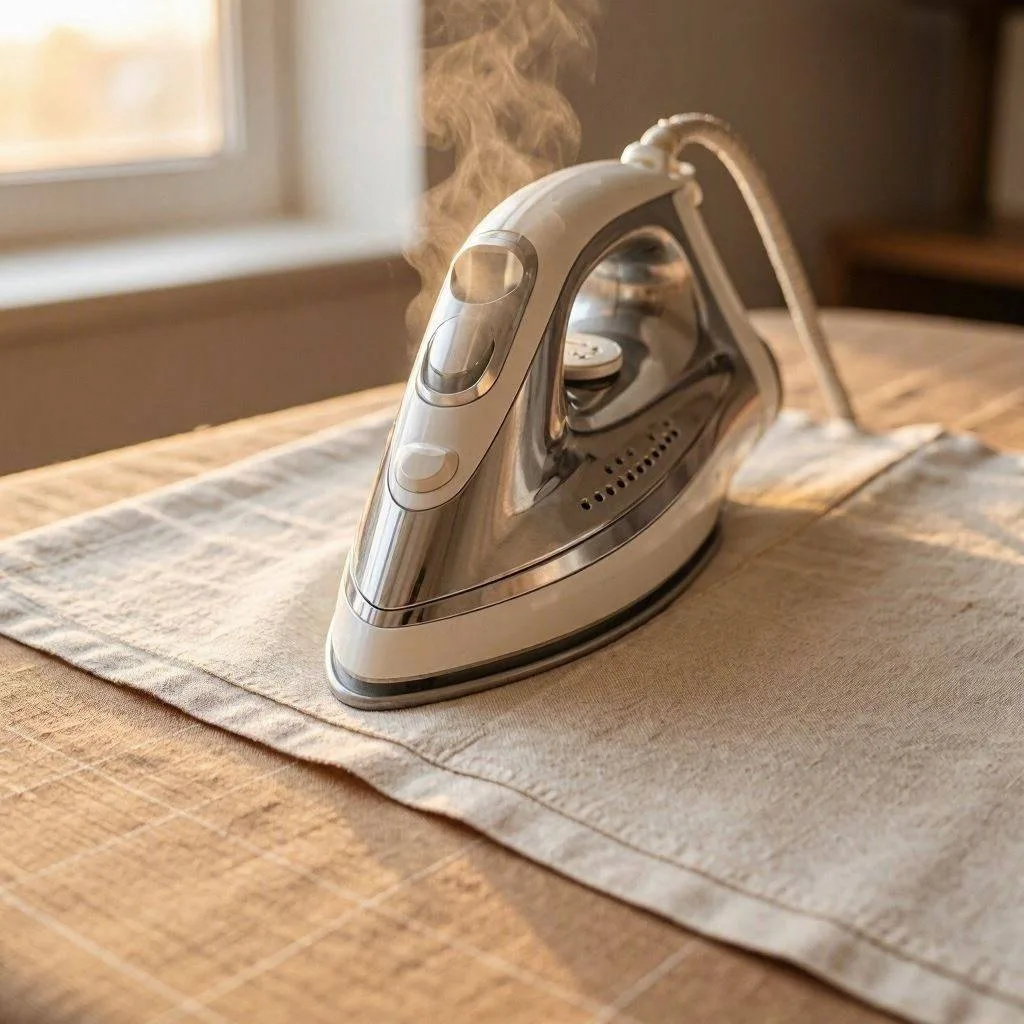
- Steam, and plenty of it. Steam is what relaxes the fibres and lets a seam actually set. A dry iron pushed hard just flattens the top; steam works the crease all the way through. Steady, strong steam output is the single most important thing.
- A shot of steam. A button that fires an extra burst for stubborn creases and thick seams. You'll reach for it more than you'd think.
- Enough weight. The iron should do the work for you. Too light, and you end up pressing down hard with your arm, which tires you out and irons less evenly. A bit of heft means the iron and the steam do the job while your hand just guides.
- A smooth soleplate. It needs to glide and not catch on the cloth. A plate that drags will pull a delicate seam out of shape.
- A reliable temperature range. You move between silk, cotton, wool and synthetics all day, and you want the settings to be honest and quick to change.
- A decent water tank. A small tank means refilling every ten minutes. Not the end of the world, but annoying once you're in a rhythm.
What gets oversold
And the parts I'd happily ignore:
- Vertical-steam-for-curtains marketing. Looks good on the box. You'll barely use it for sewing.
- "Self-cleaning everything" and a dozen named technologies. A plain descale function is enough.
- Big decorative features and the top price tag. The most expensive model isn't the best iron for sewing; it's just the most expensive.
The best iron for sewing isn't a specific luxury model. It's whichever one gives you strong steam, a bit of weight and a plate that glides, at a price you're happy with.
What I use, and why you don't need the priciest one
For the curious, I press with a Braun TexStyle 9, a 3100 W model. Strong steam, a good soleplate that slides nicely, and it holds up to a full day of studio work. It's a workhorse, and that's all I really want from an iron.
But please don't read that as "buy this one." The features matter far more than the badge on the front. Find another iron with strong, steady steam, a shot-of-steam button, a smooth plate and a little weight, and it'll serve you just as well. I'm naming mine so you have a real reference point, not a shopping order.
Steam station or a regular iron?
You'll see steam stations too, the ones with a separate water tank on the base. They give more continuous steam and are lovely if you press a lot, which is why studios like them. For a beginner sewing at home, a good regular steam iron is plenty. You can always move up later if you find yourself pressing for hours. I wouldn't make it your first decision.
A note for us here in the UAE
One local thing worth knowing: tap water here can be hard, and hard water leaves scale inside an iron over time. That scale is what eventually spits white marks onto your fabric or blocks the steam holes. Use filtered or distilled water, or run the descale function regularly, and a good iron will last you years instead of months.
And when you buy, buy somewhere with local service. An iron you can get repaired or exchanged in the city is worth more than a slightly cheaper one ordered from who knows where.
You'll press more than you expect in class
If you come and learn with me, you'll spend a real chunk of every lesson at the ironing board. That's on purpose. I want pressing to become as automatic as backstitching, because it's the habit that improves everyone's work the fastest. If you're just starting out and still a little nervous about all of it, my guide on how to begin sewing in Abu Dhabi walks through the first steps, and you can see the full course details on my sewing classes page.
So before you spend a fortune on the machine, give a little thought to the iron. It pays you back on everything you make, and if you'd like a hand picking one, you know where to find me.
Read Also
How to Choose Your First Sewing Machine in the UAE
An honest buyer's guide from a working tailor: what matters in a first machine, my beginner picks (Juki, Singer, Janome) and where to buy in the UAE.
I Want to Learn to Sew: Where to Start in Abu Dhabi
Five real fears people have before booking a first sewing lesson, with an honest answer to each one.
Where to Buy Fabrics in Abu Dhabi: Guide to Best Places
Where I actually buy fabric in Abu Dhabi: Madinat Zayed Mall and the shops around it, how to check composition, and how not to lose a whole day to it.